Saturday, January 31, 2015

Box Project Introduction


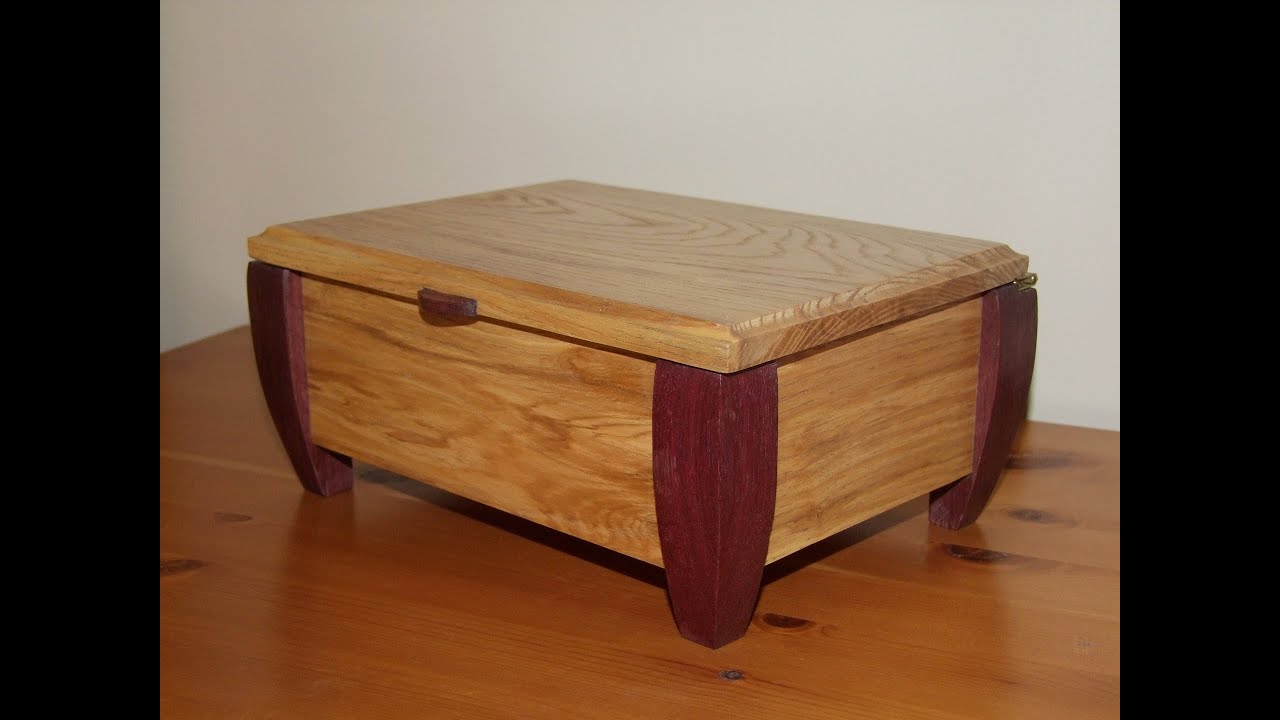
In this project we will build a wooden box. A box can be a simple hollow rectangular form to hold, store or transport a variety of things or it could be a more ornate form designed for one very specific object. This project will allow us to learn to work with additional woodworking tools and to explore "joinery" techniques woodworkers use to create strong connections between wooden parts. While there will be a limit to the amount of materials used and hence the overall size of your box, there are opportunities for you to be creative in its design and construction. 
You should do some research using at least the search terms "wooden box" and "reliquary" to see a wide range of forms boxes take. Pay particular attention to the construction techniques you observe. How are the corners joined? Search the terms: "joinery", "butt joint", "rabbet joint", "lap joint", "box joint", "finger joint", "miter joint", "dovetail joint".
 

Is there a lid and how does it work? What aspects of what you see might be possible with your own box design? Use your sketchbook to keep track of ideas. Make notes of useful websites you found. Print out pictures and paste them into your sketchbook for future reference. 
You will be asked to create blog posts about your ideas and techniques you used to create your box. Your preparatory research might be the content of your first post for this project. 

Wednesday, January 7, 2015

Mallet Brainstorming

After doing my research, beyond some of the more normal designs, I found myself thinking about two more personal approaches. One idea was using the least manipulated pieces of wood, possibly with the bark still on and leavin a bit of branch for a hanging hook. 
My other idea is to use the construction method of stone age stone axes. Since I'm think of making a small mallet it should still be strong enough. 
We have two family get-togethers every summer, one where we have a crab feast and another where we have lobster. At both we use this collection of crappy mallets that always fall apart. I saw a nice version of a crab mallet at Williams-Sanoma and it got me thinking about making my own "good" version. 

Here's the mallet I saw at Williams-Sanoma. 

Tuesday, January 6, 2015

Making a Mallet Research

I used a few different search terms with Google image searches and found a variety of all wood tools.
Using the term 'mallet" I found these images. There seem to be two main construction techniques. In some the handle seems to be inserted into a hole in the head and glued or otherwise secured. In others the handle is slightly wedge-shaped and inserted through the top of the handle with the thick part becoming wedged in the top. The handles can be rounded or rectangular as well as the head. The grain on the head seems to run perpendicular to the handle.


I like the use of different woods and mixed up grain directions in the head.


Using the term "hammer" I got mostly images of the standard metal hammer so I tried "wooden hammer" that returned many of the same images as "mallet" but a few interesting different ones appeared. 
This one apparently is used in shaping sheet metal and in auto body work.


This one has pockets in the head for filling with metal shot.


Using the term "maul" found these. Each seems to have either been carved from one long log or by inserting a handle into a larger head. In the two piece construction mauls it seems that the grain of the wood in both pieces runs lengthwise.


When I used the search term "wooden sledge hammer" I found these images. They all seem to be much larger versions of the mallet. Most seem to have handles about 3 feet long. Some have metal bands around the head to keep the heads from splitting with the grain. The grain of the head seems to be perpendicular to the grain of the handle. 


This one was described as a circus tent stake sledge.


When I used the term "axe" I got mostly metal headed tools but there were a few examples of ancient stone axes that had some interesting construction techniques that I wondered about using to make a my wooden mallet.